For the love of Christ controls us, because we have concluded this: that one has died for all, therefore all have died; and he died for all, that those who live might no longer live for themselves but for him who for their sake died and was raised.
–2 Corinthians 5:14-15
In the end, as my mother finished talking, saying that there must be a better way, I heard that resounding voice one last time, within me and all about me. Once and for all, it firmly declared, “You will find a better way.”
–Rev. James Lawson Jr., Nonviolent, p. 22
Dear APUMC Family,
I have been thinking about these words quite a few times during my recent travels: “he died…so that those who live might no longer live for themselves…”
I thought about this level of courage as Kristi and I were touring the Iona Abbey in Scotland, and seeing where St. Columba helped to introduce Christianity to those shores in 563 AD.
I thought about it again as I read over the conviction of the present Iona Community in their particular declaration of faith. As stated, they believe:
- The Gospel commands us to seek peace founded on justice and that costly reconciliation is at the heart of the Christian faith.
- Work for justice, peace, and an equitable society is extremely urgent.
- We have a responsibility to live with care for the whole of God’s creation.
- Creation can provide for the needs of all, but not for the greed–leading to injustice and inequality–which endangers life on earth.
- Everyone should have the quality and dignity of a full life, with adequate physical, social, and political opportunity, without the oppression of poverty, injustice and fear.
- Social and political action leading to justice for all, encouraged by prayer and discussion, is vital for the work of the Church.
- The use or threatened use of all weapons of mass destruction is theologically and morally indefensible. Christians must oppose them.
I thought about this verse again as I spent a week studying St. Francis in summer school at Oxford, engaging with Dr. Kenneth Barnes (author of Redeeming Capitalism) and other students about the history of economic theory, the Economy of Francesco Movement, Market Humanism, and other emerging ideas now present at the intersections of faith, wealth, and the Divine will of justice for all. As one would expect, my fellow sojourners and I needed more than just a week to get this all figured out, but it was certainly an engaging conversation.
At the heart of the discussion was a theology of the Cross. Christ died…that those who live might not live for themselves…The same theme kept coming up again and again.
It was there as I worshipped in the cathedral at Christ Church where John and Charles Wesley had been ordained as priests in the Church of England in 1728.
It was there as I walked past the man who slept with his vodka bottle day after day just outside the gate of Christ Church at Oxford in 2026.
The verse was everywhere during my travels, challenging me the question of what sort of systemic change might be possible if, in fact, “the love of Christ controls us.” It would be a struggle, no doubt; but well worth the effort of the journey, no?
The closer I got to returning home, the more I considered the examples in our community. Again, I thought about the witness of my dearly departed friend and mentor, Deaconess Clara Ester.
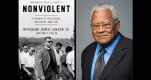
As a way of honoring her memory, I, with the support of dear colleagues, have decided to host a ‘virtual book club’ on the recently published memoirs of the Reverend James Lawson Jr. The book is Nonviolent: A Memoir of Resistance, Agitation, and Love (2026).
In the early days of the Civil Rights Movement, when Dr. King was looking for someone to help educate the young people around him on the principles of nonviolence, he turned to James Lawson. Those who knew Clara Ester know that Rev. Lawson was her pastor during her most formative days as a young student in Memphis. Her accounts of his influence upon her life’s trajectory are not to be underestimated.
As I often think of Clara in the same fashion, I personally cannot think of a more appropriate task than to spend some time learning from virtues and values that shaped her sense of conscience and which further strengthened her resolve. In short, I want to learn from my teacher’s teacher, and I am hoping to find a collective of others who will hold me accountable to this growth along the way.
Therefore, I invite you to join me on Tuesdays, beginning September 8, at 4pm for this 6-week discussion series on Nonviolence by Reverend James Lawson Jr. Participation shall be free of charge. However, I will encourage participants to consider a donation to the Dumas Wesley Community Center (www.dumaswesley.org) in honor of Clara Ester.
If you would like a zoom link to this future offering, please check future APUMC newsletters and the church webpage (www.apumc.com) for registration. For now, I recommend that you order the book.
This Sunday, we will be blessing backpacks, baptising a newborn baby, and bearing witness to the God who is relentless in the ways of reconciliation (Psalm 133, Genesis 45:1-15).
Indeed, this is a better way. Or so I do believe.
It’s good to be home. I hope to see you on Sunday.